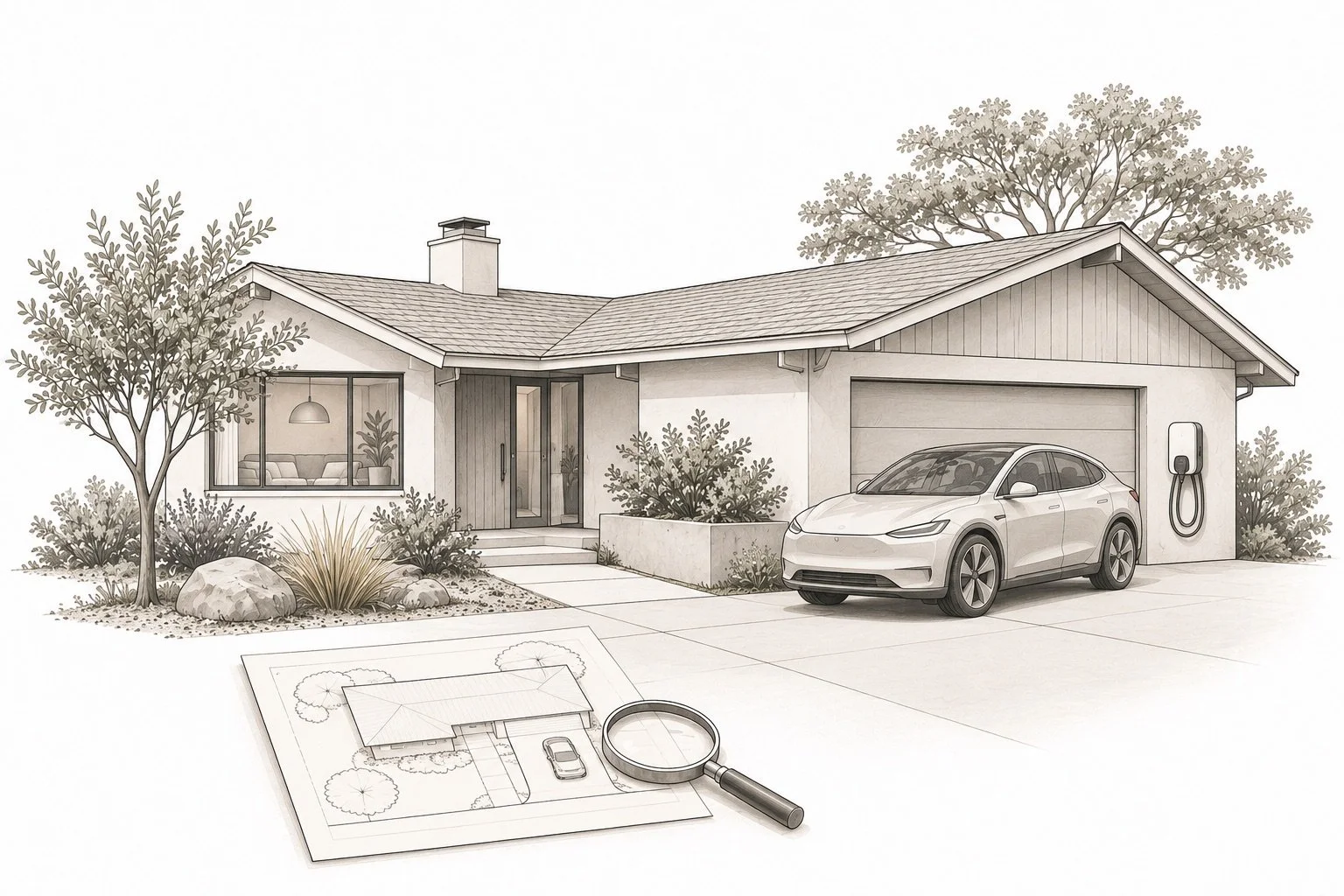
“EV-ready” is a useful conversation starter, but it is not a complete property specification. A garage photograph, a charging unit on the wall or an available parking space leaves questions about equipment, electrical capacity, approvals and the way you expect to use the home. Buyers comparing Palo Alto, Mountain View, Los Altos and Sunnyvale properties can make those questions part of a consistent research brief.
This Property Nerds® guide is a planning framework for discussions with your agent, a qualified electrical contractor, the responsible permitting agency and the utility serving the address. It does not determine whether a particular installation is safe, approved or feasible. The Boyenga Team’s NextGenAgents™ approach starts with the practical use case, then connects the digital research with property-specific professional review.
Define what you need the parking space to do
Before comparing equipment, describe the vehicle or vehicles you expect to charge, your typical parking arrangement and the time the vehicle would usually be at home. Include any planned change in vehicle, household schedule or parking location. Ask the vehicle manufacturer and electrical contractor how those needs should inform the equipment discussion. A faster-sounding specification may not answer the most important question: what setup suits your actual use?
The U.S. Department of Energy’s home charging overview explains Level 1 and Level 2 options, the importance of electrical capacity review and the role of local requirements. Use it to prepare questions rather than diagnose a house from its age or panel label. Keep your proposed use case beside every estimate so you can see whether competing proposals address the same needs.
Separate existing equipment from a future installation
For an existing charger, ask for the make and model, available installation documents, operating instructions and the records that describe the work. Clarify which equipment is intended to remain under the purchase agreement. If an app, account or subscription is involved, ask the manufacturer how a new owner establishes control without receiving the seller’s private credentials. Our internet and smart-home buying guide provides a wider handoff framework.
For a future installation, write down what has actually been evaluated. An unused outlet, conduit or empty space near a panel should be recorded as an observation, with its suitability left for the qualified professional to assess. Ask what inspection, calculations, access or additional information the contractor needs before giving a property-specific recommendation. Do not open electrical equipment or try to validate capacity yourself during a home tour.
Ask about the whole scope, not just the charging unit
Request a proposal that explains the intended equipment location, work included, assumptions, exclusions and any dependencies on other parties. Ask who will investigate utility coordination, permitting and inspection requirements, and which items need confirmation before scheduling. If the proposal includes a service change or other substantial work, ask the contractor to explain why and whether alternatives should be evaluated.
The EPA’s home EV charging guide suggests discussing load management or circuit-sharing options with an electrician and considering future electrical needs when planning capacity. Those are questions for a qualified adviser, not a promise that a particular product will avoid an upgrade. Keep the contractor’s assessment separate from an online calculator or an estimate prepared without reviewing the property.
Use local records and the correct agency
Confirm the jurisdiction and utility for the actual address before relying on a city name in a listing. Palo Alto’s official home EV charging page connects residents with City requirements, the permit route and utility guidance. Review the current instructions with the appropriate professional; do not assume a project qualifies for a program or that a listed incentive will remain available.
For Mountain View, Los Altos and Sunnyvale, begin with the relevant official building or permit service and ask which current instructions apply to your proposed scope. Our northern Silicon Valley permit-research guide links those official starting points. Keep a record identifier, date and agency response with your notes. A document search and a contractor’s evaluation serve different purposes; one does not replace the other.
Investigate shared parking before assuming private control
If parking is part of a condominium, townhouse development or another shared arrangement, ask who controls the space and what documents describe its use. Bring the proposed charging plan to the appropriate association or property manager and ask about the review process, metering questions, access and responsibility for the equipment. Have your agent or an appropriate adviser help you identify which documents need review. Avoid inferring ownership or permission from the fact that a space is assigned.
Ask how any existing shared charger is operated and how you would establish authorized access. Record the information source and current terms rather than assuming that advertised availability means exclusive use or a fixed future price. If charging access is essential to your decision, discuss that dependency and the actual transaction timeline with your agent early.
Build a decision brief you can compare across homes
If the property also has solar equipment, keep the ownership and document questions alongside the charging plan. Our solar document research guide helps organize provider agreements, available operating records and transfer questions for the appropriate advisers. An existing solar system does not replace a property-specific electrical assessment for charging.
For each finalist, keep the same fields: intended use, parking arrangement, existing equipment, documents received, professional assessment, estimated scope, approvals to investigate and unresolved questions. Give each open question a next step. This keeps a polished device photograph from becoming a substitute for a workable plan.
Connect the findings with your broader home comparison and inspection research. Eric and Janelle Boyenga and the Boyenga Team at Compass can help organize the property questions and connect them with your buying or selling conversation. Talk with the team about your next move, including the technology and everyday-use needs that matter to you.
Official resources reviewed November 6, 2026. Confirm current requirements, service, program eligibility and equipment guidance directly. This article does not provide electrical design, installation instructions, legal advice or a guarantee of charging capability, cost or approval.