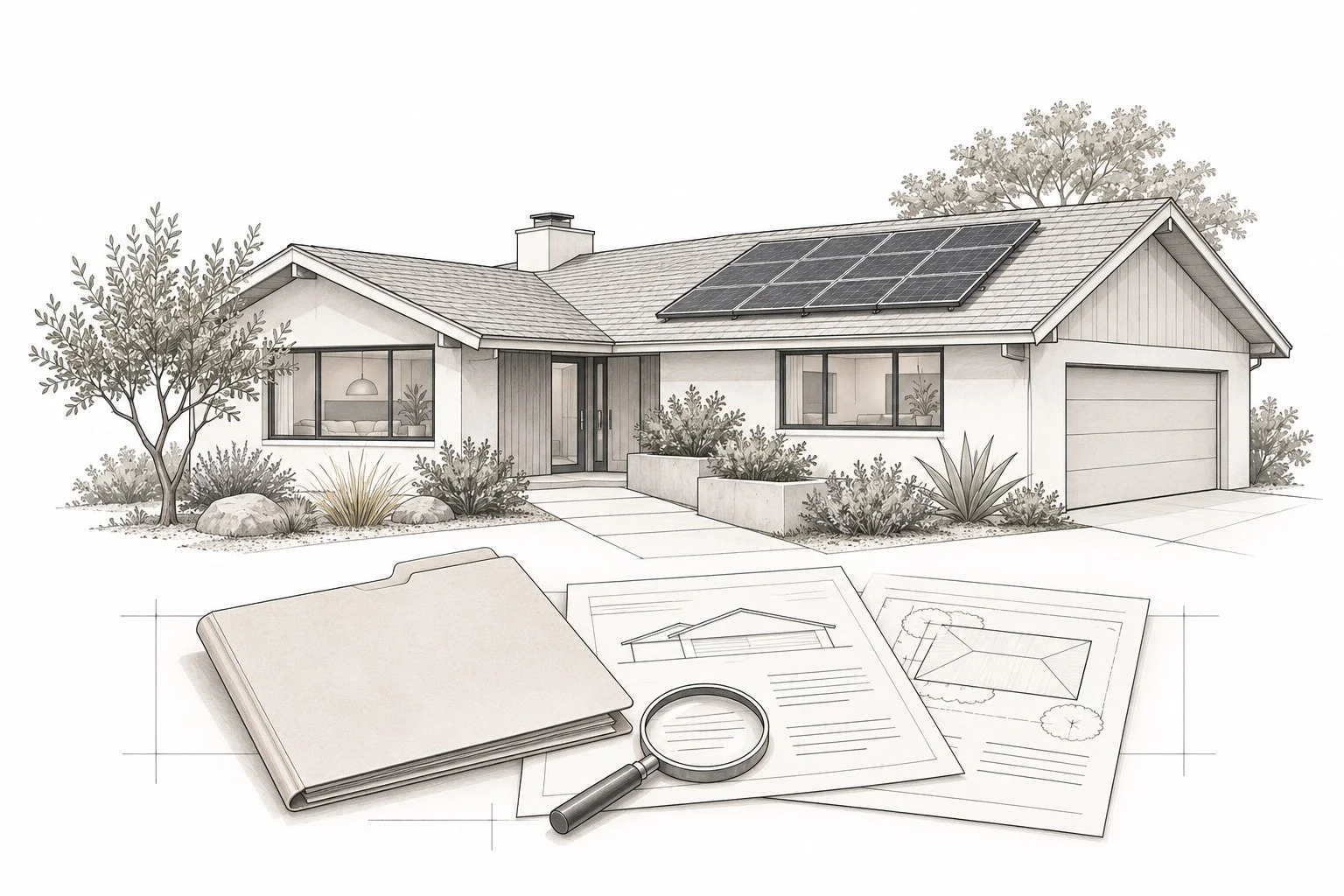
Solar panels can be easy to spot during a home search. The ownership, operating history and transfer questions usually require a closer look. If you are comparing homes in Palo Alto, Mountain View, Los Altos or Sunnyvale, give the solar system its own document brief rather than treating it as a single feature on the listing sheet.
This Property Nerds® framework helps a buyer or seller organize questions for the solar provider, utility, qualified system professional and appropriate transaction advisers. It does not establish ownership, electrical condition, financing eligibility or future savings. The Boyenga Team’s NextGenAgents™ approach connects digital records with the people who can explain what those records mean for the particular property.
Establish the arrangement before discussing the benefit
The Federal Trade Commission’s solar guidance distinguishes buying a system, leasing equipment and buying power through an agreement. Those arrangements deserve different questions when a home changes hands. Ask which documents describe the actual system and who can confirm the current arrangement. A description such as “paid solar” or “solar included” should lead to supporting records, not end the review.
Request the complete agreement and any amendments that relate to the system. Keep the equipment purchase, financing and service documents separately labeled so an adviser can identify their different roles. Ask your agent which questions should go to the provider, lender, title or escrow professionals, or an attorney. Avoid deciding from a summary alone that a payment obligation will disappear at closing or that an agreement can automatically transfer.
Build a document index that someone else can follow
Start a folder with the property address, the names shown on the documents and the date each item was received. Useful categories to request include the installation agreement, equipment identification, available permit and utility correspondence, operating records, warranties, maintenance information and any provider transfer instructions. Record which items are missing and who has been asked for them. This is a research checklist, not a statement that every property will have the same records.
Keep a one-line description beside each file. “Invoice for installation” communicates something different from “provider response about account transfer.” If two documents use different customer names, system descriptions or dates, ask the responsible party to explain the relationship. Preserve the originals when new information arrives so the history of the answer remains visible.
Ask what changes when the owner changes
The California Public Utilities Commission’s consumer guide is an official starting point for understanding solar agreements and questions about a future sale. Use it to frame a provider conversation, then have the actual contract reviewed as appropriate. Ask who initiates a proposed transfer, which documents or approvals the provider requires, what charges or continuing obligations need clarification, and how the process fits the transaction’s timetable.
Ask the utility serving the address what information it needs when service changes. Keep utility service, equipment ownership and a provider’s financing or service account as separate workstreams. Do not assume a process described for a different household or utility applies to your purchase. Discuss unresolved dependencies with your agent before relying on a particular completion date.
Read performance information in context
If operating records are available, note the period covered, the information source and any gaps that need explanation. Ask a qualified system professional to discuss what can and cannot be concluded from the records provided. A screenshot of an app is a useful item to identify and date; it is not a substitute for a review of equipment condition or an explanation of how the system is operating.
Ask the relevant adviser how a different household’s usage, equipment choices or utility arrangements could affect the comparison. Keep observed history separate from a forecast. This guide does not assign a dollar value to a system or promise a future bill reduction. Our home comparison framework helps place the documented information beside the rest of the property decision.
Connect the system with the roof and the wider home
Bring roof history, available installation records and any inspection questions to the appropriate professionals. Ask how proposed roof work would be evaluated, who is qualified to address the equipment and what documentation would be useful before estimating a project. Do not infer that a visible installation establishes the condition of either the roof or the electrical system.
If a battery is present, give it a separate equipment and documentation entry. Ask the provider to explain the intended operation, available instructions, service responsibilities and how a new owner establishes authorized access. Do not assume the presence of a battery means every room or appliance will operate during an outage. Use the inspection planning guide to track specialist questions and the local permit-research guide to locate official records starting points.
Make the handoff specific for buyers and sellers
Before a handoff, ask the provider or manufacturer how the new owner should obtain independent access to monitoring and support. Keep private credentials out of a shared property folder. The internet and smart-home guide provides a related framework for account and device questions across the home.
For sellers, organizing the system brief early can make follow-up questions easier to route. For buyers, a short list of confirmed facts and unresolved items helps prevent assumptions from becoming part of the plan. Eric and Janelle Boyenga and the Boyenga Team at Compass can help connect that research with your next move. Bring the property address and your open questions to the team.
Official resources reviewed November 6, 2026. For additional contractor and agreement questions, see the California Contractors State License Board’s Solar Smart resource. Confirm current requirements and property-specific terms directly. This article is educational and does not provide electrical design, legal or tax advice, or guarantees about system output, transfer approval or financial results.